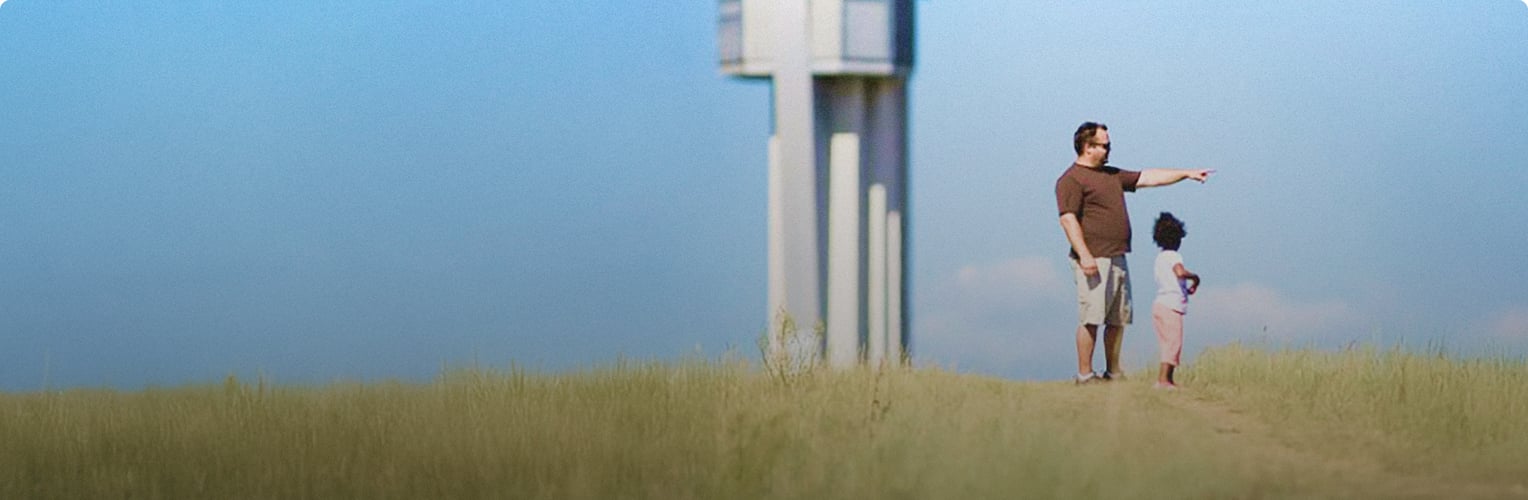

A GLOWING HISTORY, A BRIGHT FUTURE.
This place continues to be studied around the world — by city planning departments, sustainability experts and the development industry — as a model for how to build places that treat the environment with respect, support economic vitality, inspire a true sense of community and deliver moments of joy and beauty every day.
So how does an international airport become one of the largest, most innovative, most award-winning examples of sustainable New Urbanist redevelopment in the country? Well, it took a lot of thinking, a lot of courage and a lot of runway concrete recycling. And to read the whole exciting tale will take a little scrolling. Let’s jump in.

WHERE IT ALL BEGAN
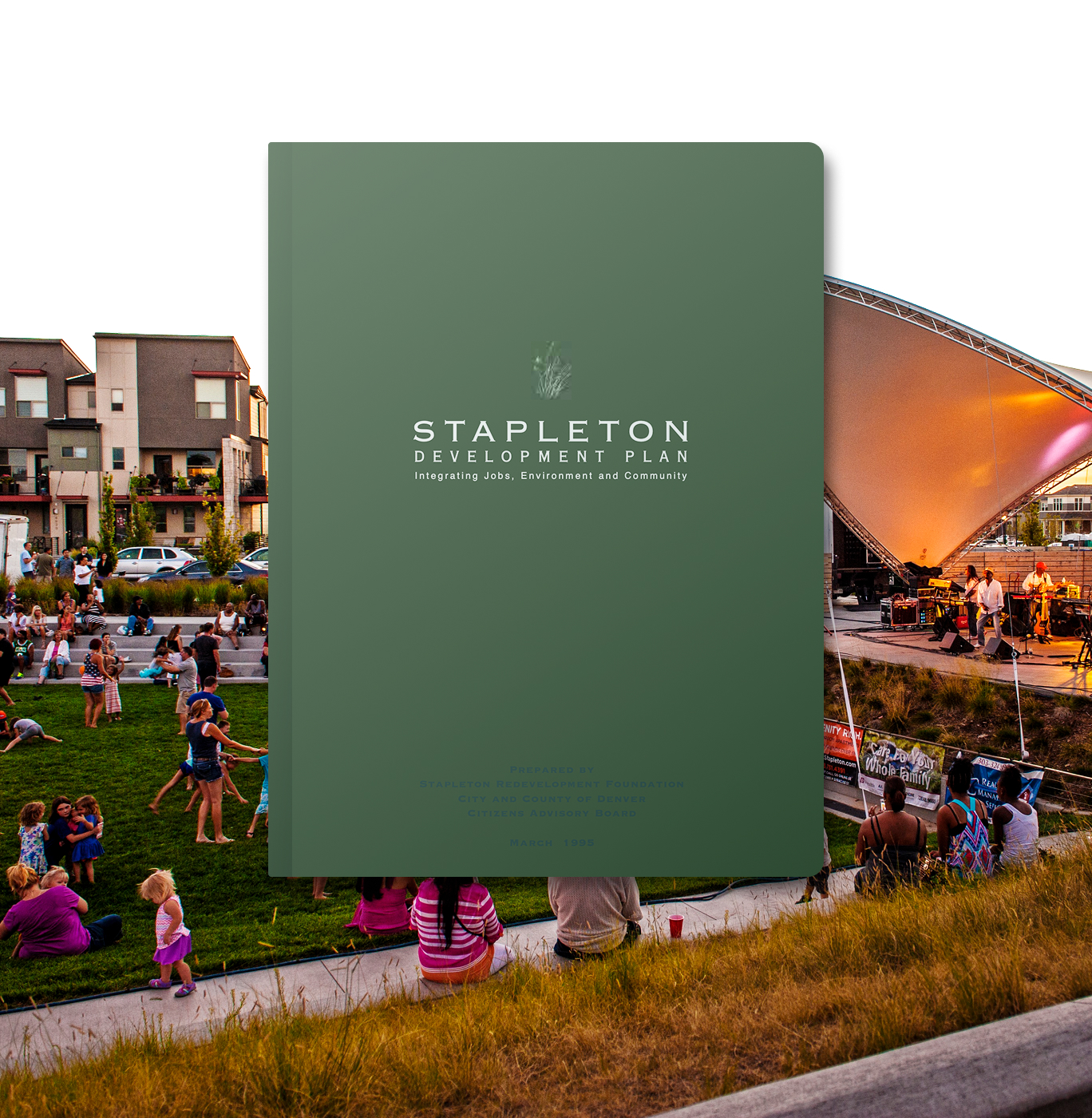
THE GREEN BOOK.
The first thing to know about the redevelopment of Stapleton International Airport is that it was something the Denver community wanted to do for itself. It began with a plan created in the 1980s by the City of Denver, a non-profit redevelopment foundation and a citizens advisory board. The plan, nicknamed The Green Book, was the outcome of over five years of discussions with the Denver community, including more than 100 community meetings.
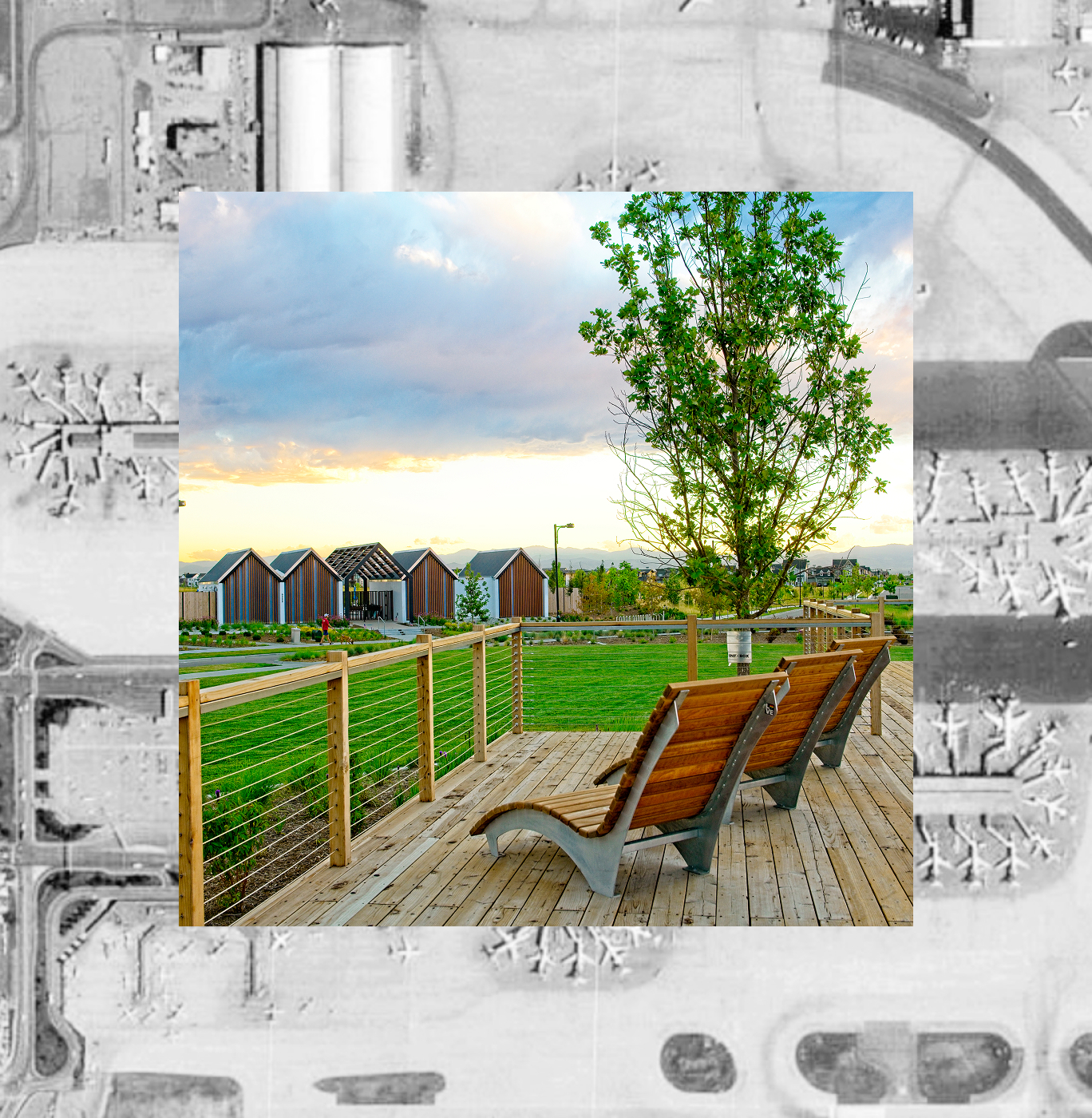
TWO DEVELOPMENT TEAMS AND A NEW NAME.
In 1989, the City of Denver decided that Forest City Enterprises was the development firm best suited to fulfill the vision of the Green Book plan. At the time, the consensus was to continue using the Stapleton name for the community, since the airport was such a big part of Denver's history. Fast forward to 2018. Forest City sells the remaining undeveloped land of Stapleton to Brookfield Residential and Brookfield Properties, laying the groundwork for an exciting new chapter. Two years later, a widespread conversation within the broader community led to a name change from Stapleton to Central Park, moving away from any association with former mayor Benjamin Stapleton, who, it was discovered, was linked to a racially divisive chapter in Denver’s history.
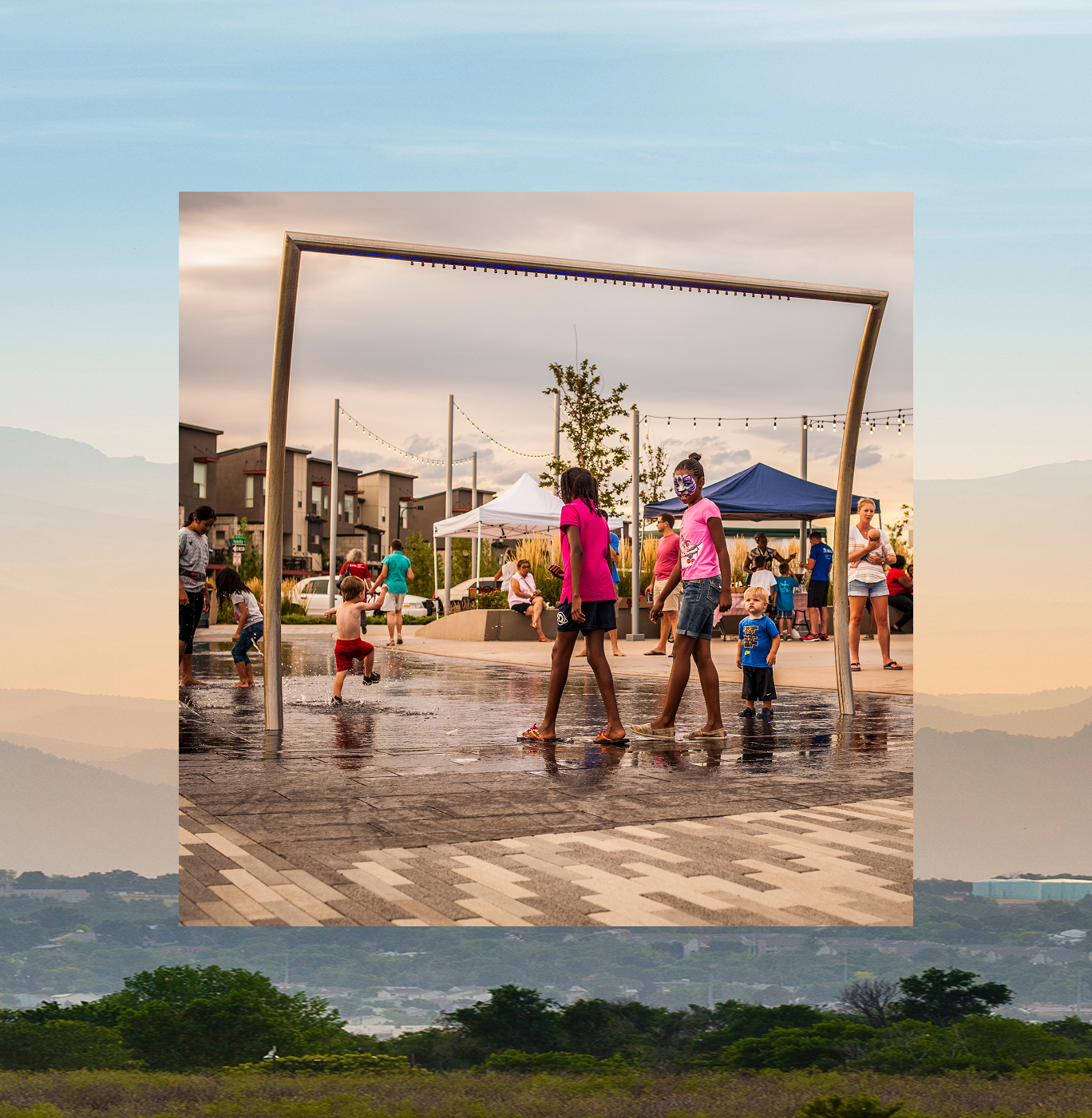
NEW URBANISM AT SCALE.
New Urbanism is old wisdom rediscovered. It’s the approach to community building that emphasizes walkability, mixing homes with neighborhood parks, big greenways and other uses such as shopping, dining and offices, and designing those homes with authentic architecture featuring big porches in front and alley-loaded garages in back. As of the early 2000s, the concept of New Urbanism had only been practiced on a relatively small scale. Then came the redevelopment of the 4,700-acre Stapleton airport. Which ultimately proved that not only can New Urbanism be successful at town scale, it can create a level of long-term value for homeowners, businesses and the wider community that far surpasses the typical suburban development approach.
MORE DENVER
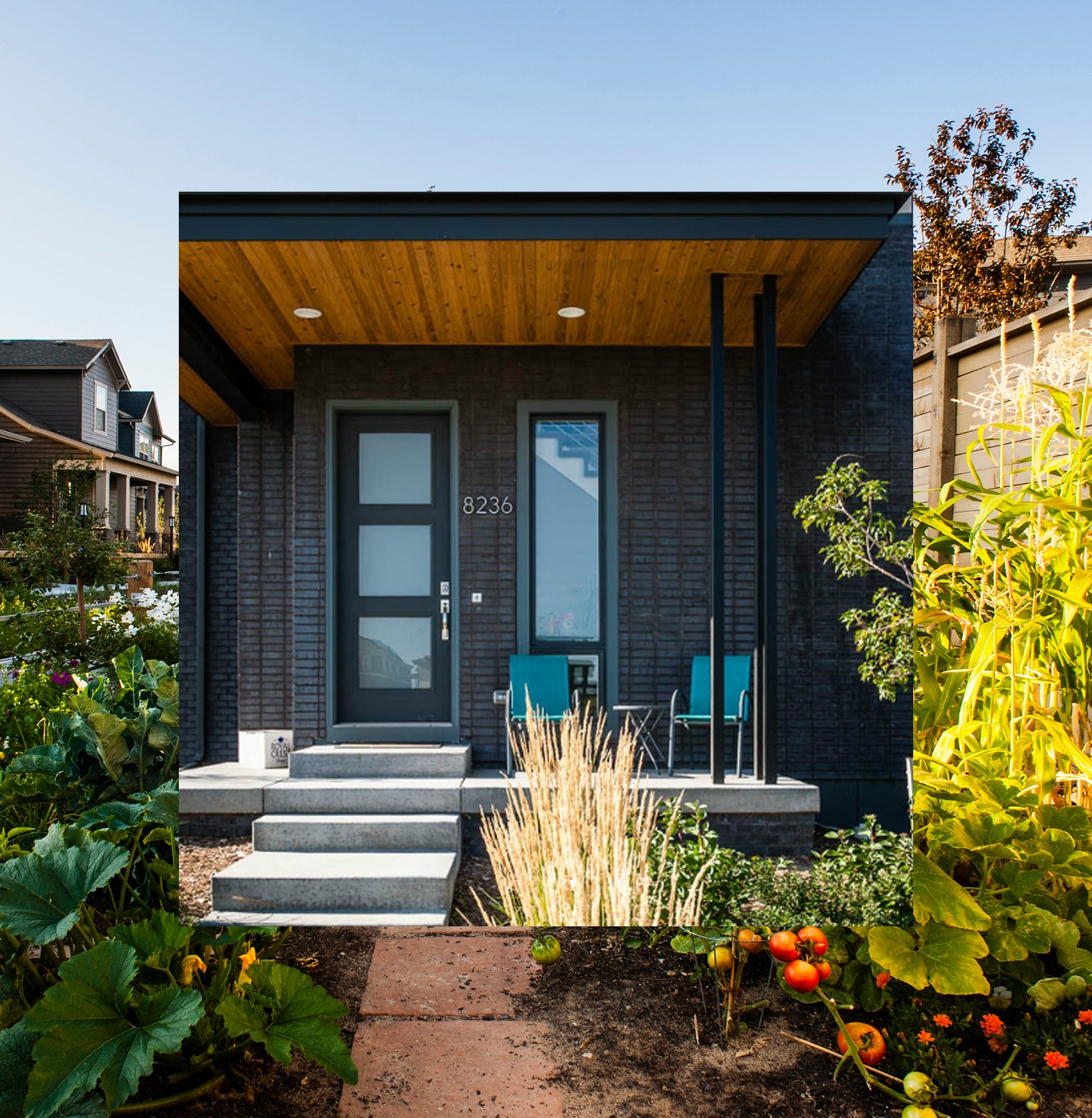
The real beauty of Central Park’s New Urbanist plan was that it wove seamlessly into the pattern of Denver’s most beloved original neighborhoods. With tree-lined streets. Homes that have big porches in front with garages tucked behind. Real architecture: bungalow, Victorian, craftsman, mission, etc. Having at least one park within a five-minute walk of every home. In other words, time-tested principles but combined with all the smart ideas we’ve learned about homebuilding over the past 100 years. As we often said, it’s like Wash Park with big closets.
SUSTAINABLE BY NATURE.
Most people think sustainability is all about the environment. But it’s also about creating a place where the economic and social life of a community can thrive. And the Stapleton redevelopment had a masterplan for all three facets. A few examples:

1.1K ACRES OF PARKS BUILT AND NATURAL HABITAT RESTORED
1.1K ACRES OF PARKS BUILT AND NATURAL HABITAT RESTORED
helping to save water, reduce carbon emissions and provide places for people to gather.

6.5M TONS OF CONCRETE RECYCLED
6.5M TONS OF CONCRETE RECYCLED
turning it into “Staplestone” that was used for numerous construction projects around the region.

4.7K ACRES OF LAND RECYCLED
4.7K ACRES OF LAND RECYCLED
giving the site of an outdated airport a higher and better purpose.

5.9M SQ FT OF COMMERCIAL SPACE DEVELOPED
5.9M SQ FT OF COMMERCIAL SPACE DEVELOPED
giving businesses a place to grow and letting Central Park residents walk or bike to workplaces, shopping, dining and services.

LIGHT RAIL ARRIVED IN 2016
LIGHT RAIL ARRIVED IN 2016
turning Central Park into a true transit-oriented development.
A LONG-TERM INVESTMENT IN NEIGHBORLINESS.
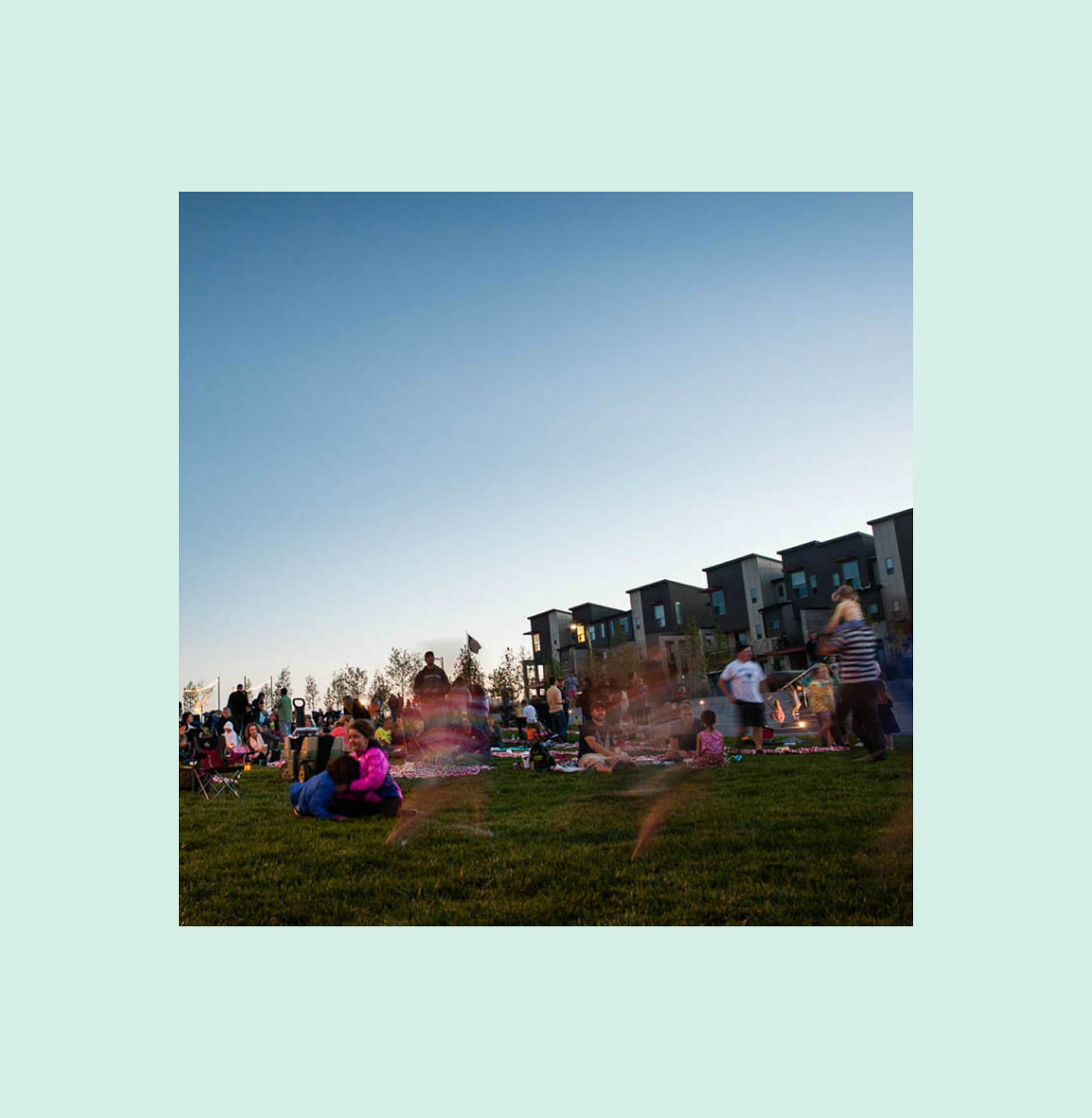
Urban planners call it “social sustainability.” The rest of us call it “community spirit.” But by whatever name, it is essential to the life and health, both mental and physical, of a place. This is why the Stapleton redevelopment created the Master Community Association. The MCA is a first-of-its-kind non-profit that not only cares for the parks and recreation spaces of Central Park, it brings the whole community to life with an incredible calendar of concerts, seasonal celebrations and other programs. In other words, the MCA is what puts the community in our community.
SMART FROM THE START.
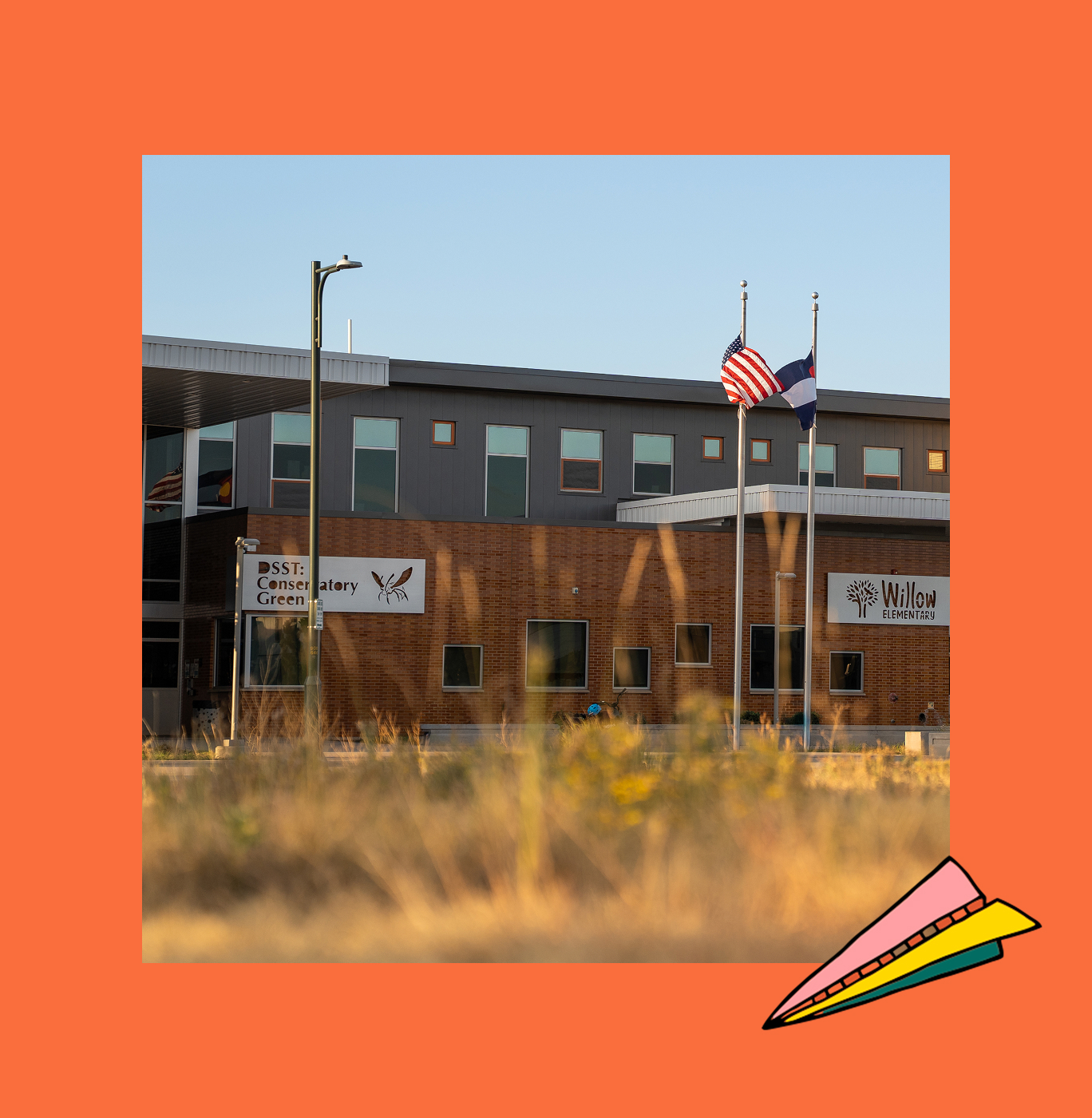
Back in the 1990s, city-loving Denver families faced a difficult choice. Put the kids in Denver Public Schools, which were struggling. Pay for a private school. Or retreat to the suburbs to find better schools. The Stapleton redevelopment offered a new option with an education master plan that put quality neighborhood schools at the top of the priority list. Through a multifaceted public-private effort, Central Park is now home to no fewer than 23 outstanding schools: public, public charter and private.